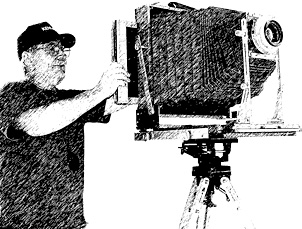
 How many times have I been asked, “is that an old camera?” I usually have to explain that no, it is actually a modern version of an old camera. Seldom am I asked why I would use something like an old bellows-type camera. But I get the feeling that there are those that would like to ask why.
Am I the only one that believes that simplicity has its place? For me, it really has its place when it comes to my art form. When I get out in the field, I want the equipment to become transparent in its function. And, the best way I have found to achieve this transparency is through simplicity.
I have started a list of things that I like about using a view camera. It goes something like this:
No batteries
No multi-function buttons
No multi-layered menus
No planned obsolescence
No little tiny buttons to locate
Nothing new to learn
Nothing to upgrade
I am sure with a little more time I could think of more, but I am sure you get the idea. I love the feel of a view camera. I love the feel of a view camera on a very large, heavy, wooden tripod. I love to climb under the dark cloth and just look at the ground glass. I love the fact that the image is upside down. Nothing will do more to improve your compositions than a flipped image. I like the slow pace of the view camera. I love spending an afternoon just exposing two sheets of film of one subject. Waiting for the light. Waiting for things to come together just right. I like the idea of having only one chance to make the image. I love to just stand next to the camera all set up and ready to click the shutter and just wait. I hate to be rushed. I hate to be pressured. And if things don’t work out, I can just put the camera up and head home. Nothing gained, nothing lost. There are times when just being out there with the camera is the best part of the entire experience. It is great when I bring home a really nice image, but not always necessary.
So. . . does anyone reading this believe I am a view camera advocate? Yep, that pretty much describes me. I would never even consider making a serious photograph with anything but a view camera loaded with B&W film. Just me, but I love what I do, and now you know why.
JB
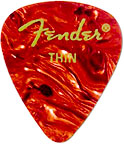 Unless you play guitar, you probably have never heard of a Fender Thin. If you are not a guitar connoisseur, it is a guitar pick. Now why on earth would someone that shoots LF and ULF be interested in a guitar pick, you ask?
 Seems as you shoot larger and larger formats, you find more and more mistakes to make. Anyone that has spent much time with a view camera knows all of those common mistakes you can make. No matter how experienced you are, and what you do to create a routine, something happens every now and then.
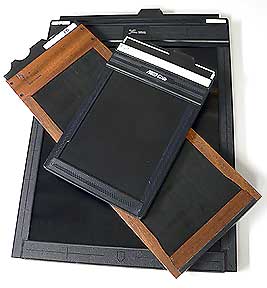 How do you identify sheet film? You put unique numbers on the film holder, but how can you identify which sheet of film came from any particular holder? You may be able to identify the film by taking notes and knowing the subject. But, what if you make several exposures of the same scene, say using different filters? How do you know which filter was used on each sheet?