Commentary

EDWARD WESTON AND HIS DAYBOOKS

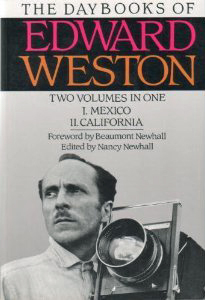
The Daybooks of Edward WestonHave you ever wondered what the life of an artist would be like?  Edward Weston was not only an artist, he was obsessed by his art.  Every day before everyone else was awake, Edward would write in his Daybook.  His journal has become a classic of photographic literature.  At one point he destroyed some of his daybooks, but those that remained were eventually transcribed and published.

Weston was a towering figure in twentieth-century photography, whose restless quest for beauty and the mystical presence behind it resulted in a body of work unrivaled in the medium. John Szarkowski observes that “It was as though the things of everyday experience had been transformed… into organic sculptures, the forms of which were both the expression and the justification of the life within… He had freed his eyes of conventional expectation, and had taught them to see the statement of intent that resides in natural form.”

This is a fascinating and informative read.  A look into the life of a dedicated artist.  If you are serious about your photography. . . if you think you are serious about your photography. . . read “The Daybooks of Edward Weston” and see how you compare.

 
JB

Posted by JB Harlin in Commentary, Photography

THANK YOU

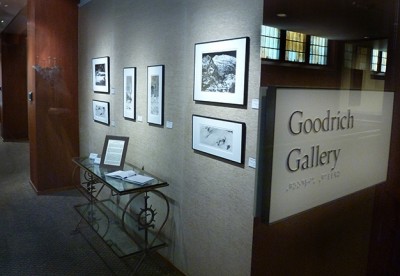
Goodrich Gallery We would like to thank everyone that took the time to see our exhibition “A B&W INTERPRETATION OF NATURE”  that ran the month of March at the Goodrich Gallery in Dallas.  We had a lot of comments, met many new people and heard a lot of encouraging remarks.  The reception was great fun and we appreciate everyone that stopped by.

We would also like to thank the Goodrich Gallery, their committee, and staff for their support and grand hospitality.   Everyone was very knowledgeable and helpful and were key to the success of this exhibition.

Again, thanks to everyone for your continued support.

JB & Susan

Posted by JB Harlin in Commentary, Events, Photography

CONSISTENCY IS THE SECRET

Fred Picker QuoteWorking in the wet darkroom processing both film and paper is nothing more than simple lab work. You are a lab technician in charge of performing a series of processes. These processes must be done exactly the same way each and every time in order to guarantee consistent results. Any variation in process or mixtures will affect the end result.

You have to keep track of exactly how you process both film and paper. Consistency is of paramount importance when processing film. You only have one chance with your film and if you make a mistake there is no going back. If you happen to make a mistake when printing you can always start again. You only lose a sheet of paper. With the film, you loose the image forever.

It is imperative that you do everything exactly the same every time. Any variation, even down to the tray sizes and volume of chemical can affect the end result. Film processing is not hard, but you have to do everything exactly the same every time. It is also worth mentioning that you have to be scrupulously clean. Contamination of any of the processing chemicals can cause disastrous results.  One thing that is easily overlooked is mixing up the stock solution tops when using developers that have more than one part.  Only remove one cap at a time and replace each before opening the next.  Also, mark each cap and never mix them up.

Good darkroom habits begin with keeping notes. I keep a three ring binder containing notes on all of the procedures that I use in the darkroom. I have notes for each film size that includes the size of the trays, chemical mixtures, volumes of chemicals, and number of sheets of film for each processing run. When I begin a film processing session, the first thing I do is grab my darkroom notes. I make sure that I do the exact same thing every film run.

Even the printing process needs to have order and a plan to ensure you do not end up chasing your tail. My darkroom notes also contain information that pertains to printing. Though not as critical as film, I want to be sure I do things in an orderly and repeatable manner. I also want to be sure I mix all of my chemicals correctly, so everything is written down.

One of my favorite darkroom stories comes from Fred Picker. In his information packed little book titled “ZONE VI WORKSHOP” he describes his early days trying to get a handle on the process of B&W printing. If you have a copy of this gem of a book, turn to page 40 and read the chapter titled “THE CUSTOM LAB.” This is a really good account of how NOT to print.

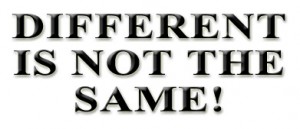
I keep notes on most everything I do in the darkroom. There are times when I cannot remember exactly how I did something. With my notes there is no question as to how to remain consistent. As Fred Picker used to say, “DIFFERENT IS NOT THE SAME!

JB

Posted by JB Harlin in Commentary, Darkroom, Photography

THE LEARNING WORKSHOP

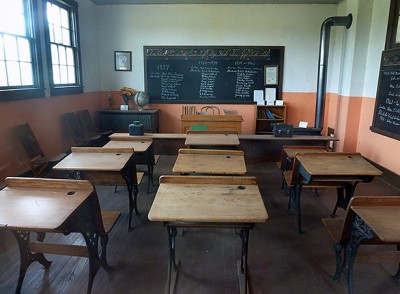
School WORKSHOPLast summer at Yosemite I lent a boy my 4×5 camera.  He said, “what do I do with this now?”  and I said, “unscrew it and find out for yourself.”  Why shouldn’t he learn how to collapse a camera?  Why should I teach him that?   You mustn’t treat a child as if he’s a nitwit; tell him something and let him go to it.  I don’t believe we do enough self-education.

Interview, Imogen Cunningham, “Dialog with Photography”

I personally have always been one to learn on my own.  I have never been much to attend classes nor workshops.  I do enjoy meeting with other like-minded people and talking shop, and exchanging ideas and techniques, but serious learning for me is a very personal thing.  When I need to learn something new I find a book and start to read.  In this modern world of high-tech, I can also do an Internet search.   I have always been a self starter and learner, that is just how I think.  I do love the atmosphere of a workshop though.  A good workshop is short and sweet.  An intense few days of focused study.  But, it seems that the idea of the photography workshop has changed over the years.

What has happened to the old-fashion photography workshop?  It seems that most every workshop now days is more about the destination, than the art of photography.  For me, learning anything new, or honing the skills you already possess, can be accomplished just about anywhere you can find a comfortable, and appropriate place for learning.  I find it hard to understand why in order to attend a photography workshop you have to trek to some far and picturesque location.  This is expensive and if you believe you are going to bring back a portfolio of prize winning prints. . . well. . . I just don’t see it happening.

A workshop is a place to go to learn.  It is a place to expand your skills, learn new skills, interact with like-minded people, and learn from an experienced instructor.   You need to attend a workshop for the purpose of learning and this can be done anywhere.  Why not spare the expense of exotic travel and attend a local workshop?   All you really need is a classroom. . . most any classroom will do.   It would be nice to have an interesting place near by to go outside and get some hands-on field experience, but this need be nothing more than a small park.  The idea is to learn procedures that you can use when you do travel to some great place and find something interesting.

Once you have honed your technique in familiar territory, then you can head to the beautiful places.  I can never make meaningful images amidst the distraction of a group of people.   My concentration is continually interrupted and I find it difficult to stay focused.  Only when I am out alone with my subject can I think artistically.   The workshop environment is too cluttered and the distractions are far too great.  You need to be paying attention to the message, as Fred Picker said, “steal with your eyes.”   Watch others, especially the instructor, and note how they approach a particular situation.   Ask questions as to why he chose to work in this manner.  Watch intensely and make notes, both mentally and physically. . . yes carry a notebook and a pencil.    Take notes, make diagrams and sketches, whatever it takes so that you can remember and learn.  Do not expect to make meaningful images at a learning workshop.  Whatever images you make within the workshop atmosphere are for the purpose of learning.  Leave the really serious photography for when you are alone and are not distracted.  You will make images that are more meaningful and be more focused when you are able to concentrate on your subject.  This is when you put into practice those things you learned in the workshop.

I would love to see more local, small workshops that teach the basics through advanced photographic technique.  A classroom-type workshop, where those that are interested in learning the how-to, can learn the ins and outs.   Where one can hone those skills necessary for serious work when they do travel to those wonderful places and find things that inspire them to be creative. A learning experience, not a travel experience.  How about more workshops that are a learn now, travel later event?

JB

Posted by JB Harlin in Commentary, Photography

CONTROL IS SIMPLE

Transfer GraphLet me begin by qualifying what I am about to discuss by saying that I am a traditional B&W photographer.  I shoot film and print in a wet darkroom using traditional materials and techniques.  Whenever I talk about photography, I am talking about traditional B&W.  I know little about color photography and even less about digital.

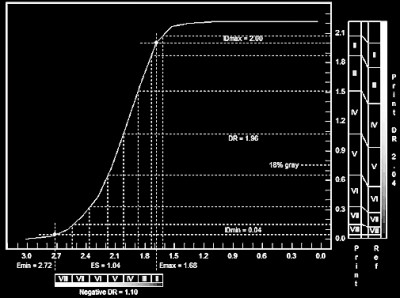
I have often heard the argument that traditional B&W is so complicated.  I actually heard that from several old-time wet darkroom color photographers.  The truth is, working with traditional B&W, wet darkroom materials is very simple.  But, there is sometimes a complex deception in simplicity.  Keep in mind that the most complex machine, or procedure ever devised is little more than a lot of simple things all working together to create a seemingly complex outcome.  True, as you add more steps, each step can interact with the others, but if you break each piece of the greater puzzle into less complex, bite-size pieces, it is understandable and controllable.

When it comes to traditional B&W photography, you only have four basic controls to worry about.  There are only four simple things that have power over the major aspects of the end product. . . the B&W photograph.

  1. Film Exposure

  2. Film Development

  3. Print Exposure

  4. Print Development

1.  Film Exposure:  This is the first, and is a very important aspect of photography.  You can manipulate how a scene is captured through the way you meter and expose the film.  There are numerous manipulations you can employ, including zone placements and filters. 

2.  Film Development:  The tonal range captured on the film at the time of exposure can be further manipulated by development.  Different developers and times will yield different results, but so far as the film goes, this is all you can do.

3.  Print Exposure:  Next comes the process of printing.  You can vary the way in which the paper is exposed.  Matters not whether you are enlarging or contact printing.  You can further manipulate print exposure by dodging and/or burning, and you can adjust the paper contrast, either by paper grades or by using VC papers. 

4.  Print Development:  The only other control you have during printing is the choice of developer, dilution, time, and maybe some additives.   But in reality, these are the only two fundamental controls available for making prints.

Certainly there are numerous smaller adjustments and techniques that can be employed in B&W photography, but these four major areas are where you start.  Anyone that tells you traditional B&W photography is difficult, simply does not have a good understanding of the process.   If you are interested in delving into traditional photography, do not be intimidated.  It is not that difficult.  What is difficult is learning the subtleties that make the process beautiful.  

You need to begin with the fundamental steps.  You can only learn by doing.  Fred Picker said, “ you can learn to talk about something by talking about it, but you can only learn to do something by doing it.”  These four basic areas are where you start.  Then proceed to fine-tune your technique as necessary.  You will soon find that you can easily control the basic processes and develop a photographic approach that suits your vision.

JB

Posted by JB Harlin in Commentary, How-To, Photography

ZONE LANGUAGE

ZONE LANGUAGEThe Zone System is always a controversial subject among serious B&W photographers.   Seems there are numerous versions and sub-versions of the system devised by Ansel Adams and Fred Archer.  Each artist must choose what works best for them.  Like most everything in photography, it is a very personal choice.

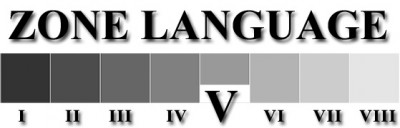
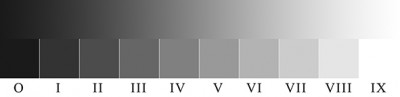
In the Zone System, the tonal scale from black to white is divided into even steps that are either twice or one half of the previous value.  This allows the photographer to translate, or visualize, meter readings into finished print values, or Zones. 

Zones

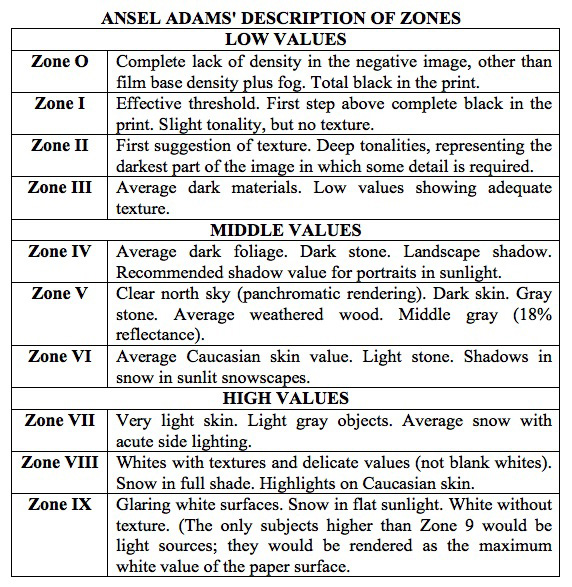
Certain elements of the scene to be photographed are sometimes used as a standard reference.  Here is how Ansel described Zones;

ZONE LANGUAGE

No matter whether you practice the pure AA Zone System, or any of its variations, there is one aspect that I believe is an invaluable tool for everyone.  Speaking in Zones is a universal language, much like math or music.  Speaking in Zones allows everyone to find a common way of communicating what they see, what they feel,  what they want their interpretation of a subject to be, or what they wish to say.

I am not a Zone System purist in any way.  I practice what I have found works best for me.  But, I do use Zones, and use the Zone language in everything I do photographically.  I prefer its simplicity and ease of expression.  I know that if I am discussing an image with a fellow photographer and I say that I placed this area on a particular Zone and this other area fell on another, we are communicating in a common language.

So, whether you are a true-blue ‘Zonie’ or not, I believe everyone should be well acquainted with the language of Zones.  In photography, it is a universal language.

 JB

Posted by JB Harlin in Commentary, Film, Photography

MY FIRST CAMERA

MY FIRST CAMERABeen some discussion lately about getting started in photography.   We seem to have a lot of people interested in film photography.  Everyone started somewhere and everyone has a story.  I had written earlier in another BLOG post about the book that got me started doing my own darkroom work, but I never mentioned my first camera.  I used my Mother’s Kodak No. 2A Hawk-Eye folder for my very first photographs.  My Mother always had to break out the camera and make a quick snapshot when anything interesting was happening, mostly family gatherings, maybe a trip or school event.  She always said, “now let me get back a little farther so I don’t cut your head off.”  I have many snapshots of the great scene with these little tiny people in there somewhere.  I never could break her of that habit.
 
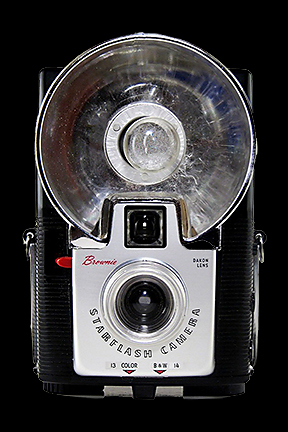
But when I was somewhere around eight or nine years old I received my first camera as a Christmas gift.  My very own Kodak Brownie Starflash that came in a presentation box, with a roll of B&W film, flash bulbs (remember those?) and batteries.  I was only allowed to use B&W film, since it was so much cheaper than shooting color.  I never did get the hang of color for anything but casual snapshots anyway.
 
There was a major train derailment just outside of the town where I grew up and I have two rolls of that.  When I was in the fourth grade we got to bring our cameras to school.  It was the annual school Easter Egg Hunt and I have photos of that and even some in the classroom.  I made the usual snapshots you would expect from a very young beginner.
 
So, that is where I started camera wise.  I have to credit my Mother for getting me hooked on photography.  I have had numerous cameras since my first.  Don’t know what happened to my original camera.  I suspect it was sold in one of my Mother’s garage sales.  But,  I was able to find an identical Brownie Starflash at a local camera show, and it hangs on the wall in our darkroom as a reminder of where I started.
 
JB

Posted by JB Harlin in Commentary, Photography

MORE CROPPING

I had made an earlier post on the merits of cropping your image and the subject has come up again.  I will stick to my original thoughts on the process of cropping.  Use it if necessary!

CROPPINGI ran onto an article by David Vestal published in an old Photo Techniques magazine from 2002 that seems to sum things up very well.

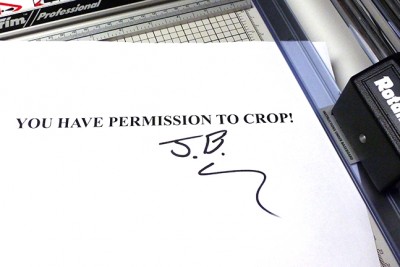
“Some people say that we should never crop photos.  They’re wrong.  When cropping will help the picture, it’s better to crop it than to leave it uncropped.  If it doesn’t help the picture, then why bother?  But it is an option, and it’s not a moral issue.  We don’t need anyone’s permission.  If you do it, do it well.”  *

I couldn’t have said it better. . . thank you Mr. Vestal!

JB

* David Vestal, Advanced B&W Printing, Photo Techniques Magazine, 2002

Posted by JB Harlin in Commentary, Darkroom, Photography

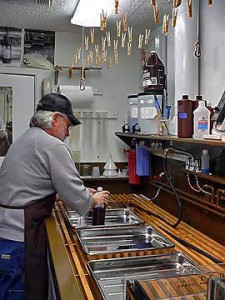
WHY THE WET DARKROOM???

WET DARKROOMNOTE:  I wrote this little rant over a year ago and never published it.  Guess it got lost among all the other posts and I have just resurrected it today.  I know I am repeating some things here, but I do so only to make my point.  My views have not changed.

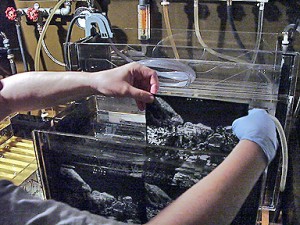
I am forever asked, why the wet darkroom? Why would you want to work with film and photographic paper when you can just click the mouse and let the magic box (computer) create a visual paradise? I am perpetually searching for the answer. . . an answer that makes sense to me, and at the same time explains why to those that ask. I have to begin by saying that nothing is ever as it is advertised. Those that have something to sell always tout how easy it is when you buy their products. If you are looking for quick and easy, then photography may not be for you, matters not what the hype says. In all of those slick commercials and magazine ads things just fall into place without any effort. Everyone has a big smile on their face and all is well. Can this be reality?WET DARKROOM

A lot of what we see today is a continuation of the biggest lie ever told about photography back in the early days of the medium. George Eastman, founder of Eastman Kodak Company, came up with a catchy slogan when he introduced the Kodak camera in 1888. His little box camera was the first camera intended for the general public and his slogan was simply, “You Press The Button, We Do The Rest.” This catch line implies that the person making the photograph need do nothing but be there, of course with a Kodak camera, and that person need know nothing, nor do anything, other than press the button and send money to Kodak. This slogan was a work of sheer genius. It made photography easily accessible to the general public and made ‘ol George very wealthy. There is absolutely nothing wrong with any of this, except for that little phrase, which implies that the operator hardly even be present. Anyone that has used a camera knows for themselves that there is more to it than just pressing that little button.
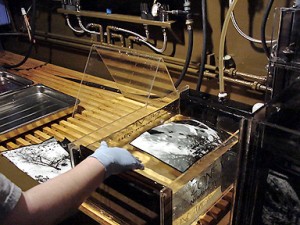
WET DARKROOMNow I can mention the next biggest lie ever told about photography, this one somewhere in the early 21st century. I am not sure exactly where this came from, but I venture to say it came from large corporate marketing gurus, better known as Harvard MBA’s. When you have large companies run by people that know nothing about the products they produce, you have idiots at the helm. They worship at the altar of the share holders and the quarterly report. Enough said! The next big lie in photography is, “Film Is Dead.” I still believe this was nothing but a marketing ploy to guide the easily persuaded customer to purchase more equipment and new technology. This time based on the layman’s misunderstanding that the computer can do anything with only the click of the mouse. You need do nothing, but supply the money. The old slogan could have been upgraded to read, “You Press The Button, The Computer Does The Rest.” I believe that by now, anyone that has tried this knows, again from hard experience, that it just isn’t that easy. No matter what the hype from any manufacturer, there is no quick and easy way to photographic success.WET DARKROOM
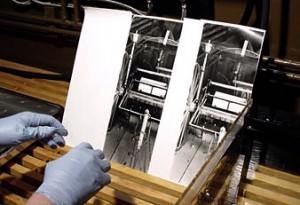
Having said all of this, I feel that the art of photography is something that requires dedication and perseverance. You have to choose your tools carefully and make sure you have the correct tools for your creativity. I have my own opinions as to the validity of what I do and why I do it in a way that suits me. For what I am about to say I have been belittled, scorned, laughed at, and cursed. Makes no difference to me. Anyone small-minded enough not to accept and respect my choices make no difference in the grand scheme anyway. My father used to say that people that use curse words have a narrow vocabulary and an even narrower mind. So my favorite description as to the validity, use, and purpose of digital imaging. . . there I said that word, Digital. . . is to simply say, “It Is Only Another Art Form.” Simple as that! Choosing the wrong medium will turn into nothing but a waste of your time.
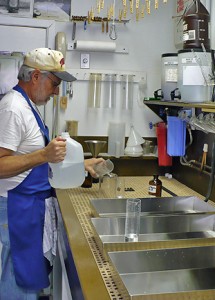
WET DARKROOMDigital imaging is not a replacement for anything. It is its own entity, has its own strengths and weaknesses. If you choose to work in the Digital arts, good for you! If you are a hybrid photographer, shooting film, scanning and printing digitally, then great for you! If is suits you and you are happy with what you create, then that is just fine with me. If whatever you create suits you, no matter what the medium, then you are on the right path. But, whatever you do, Do Not belittle me for not buying into the farce that Digital is a replacement for Film! And please do not propagate this lie to others that are new to photography. You are doing them a great disservice by funneling them into believing there is only one path. Nothing is more degrading and discouraging than to find out, much later, that you could have done something else that was much more to your liking. People need choices, and need to be able to see all of the different options that are available in the world of photography. One size does not fill all.WET DARKROOM

I realized I still have not answered the question, why the wet darkroom? All I can honestly say is, this is my choice. This is what I choose to do with my life. I can also say without reservation, that for me, a computer screen, keyboard and mouse comprise a place to work. This is where I go to get things done, find information, communicate, write (like this little rant) and to get my days work accomplished. This is not a place for me to create art. There is nothing artistic for me in front of a digital display. I do not feel anything artistic sitting at my desk, and creating art does not happen if I am not in that mood. I see the computer as a place for 100% left brain activities. When I go into the darkroom and close the door, I am immediately in right brain mode. This is where I create. Same as when I duck under the darkcloth behind that view camera. That little LCD screen on my snapshot camera is just for record keeping. There is nothing artistic there for me either. This is how I think. This is how I work. And this is the best I can do to describe why. If you find digital motivating and productive, then by all means use it to your best advantage. I find nothing about it in any way creatively stimulating for me. That is my choice. Do not belittle me if you do not agree. Creativity is fragile and is only where you find it. Use it wisely!
WET DARKROOM

One more thought. I am not on a crusade to convert the world to film. I am only on a quest to try and show everyone that there are choices. . . that the wet darkroom is still alive. If you are interested, you can still choose the medium that best suits you. Matters not whether it is the mouse or the photo tray. What is really important is that everyone knows there is a choice and they should be aware of the strengths and weaknesses of each. To be boxed into that one size fits all world is not good for anyone. Hopefully by now you understand why I choose to work in the wet darkroom.

And, one more final thought. Just in case you believe the hype that film is gone forever, take a look at my earlier post titled, “FILM IS NOT DEAD.” You can special order both B&W and Color film in any size imaginable! No matter what photographic medium you use, the next time someone asks you about photography, do not propagate the lie that film is dead.

JB
Posted by JB Harlin in Commentary, Darkroom, Film, Photography