18
Jul
2010
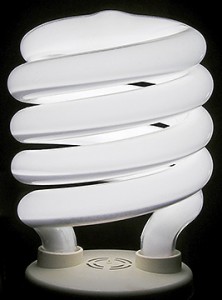 Seem things continue to change at an alarming rate. Several years ago, maybe 12-15 to be honest, I bought some supposedly daylight balanced fluorescent lamps for the kitchen fixture. They put out this really annoying, kind of brownish light that I just could not stand. They were eventually banished to the garage where they finally burned out and were discarded. It was back to the old standard Cool White fluorescent lamps and that awful color cast they generate. Fast forward to our current world and I saw some information about a Compact Fluorescent (CFL) lamp that is 5,000k and touted to be Full Spectrum. Wow! Now that is more what I was looking for.
I bought a CFL lamp that is dimmable, 5,000k and Full Spectrum for another project I was working with. I was so impressed with the light that I searched out some four footers for the kitchen fixture. Once installed I was really impressed with the fact that the room no longer had that sick green/blue light I have become so accustom to from the run-of-the-mill Cool White lamp. The kitchen light looked so good compared to the ones in the darkroom, I knew they were next.
I did take the time to look at a few photographs under both lights and the difference is remarkable. It is always difficult for me to judge print color cast under fluorescent light. These new Full Spectrum lamps deliver a much more natural light that I really like. If you haven’t looked into these new generation lamps, you might just get a pleasant surprise.
Little else to say, other than the latest batch of Full Spectrum fluorescent lamps are impressive and I really do not want to go back to Cool White. . . Man!
 I keep harping on the idea that photography is about the photograph and not the equipment. Or, at least, that is the direction I prefer to take when it comes to the discussion of photography. Talking shop about the gear is the easy part. Talking about the photograph, and the makeup of an image is much more difficult.
The reason the hardware is much easier to discuss is because it is a real, tangible, thing. A piece of hardware you can pick up and hold it in your hand. It has a name and a specific function. You can learn to use a piece of equipment. Most everything about it is well defined and it works in a particular way.
What makes up art is something that is only a feeling. You either like what you see, or you don’t. Looking at some images triggers a feeling or memory that touches you deeply, but cannot be expressed with words. What is definitely appealing to one person is completely ignored by another. To express a great piece of art in words mostly detracts from its emotional content. You just can’t explain a great image.
I am much more interested in hearing how a person was attracted to something, which in turn led them to be motivated to make the photo, rather than the f-stop and shutter speed they used. There are those times when you just KNOW it is time to expose film. The question is, how do you know?
This is the hardest part of artistic photography. There are those that have attempted to explain what is pleasing to the eye by lowering themselves to a form of art speak. Stringing big words together does nothing but make a lot of squiggly lines on paper. Talking for the sake of talk and saying nothing, is what politicians base their careers on.
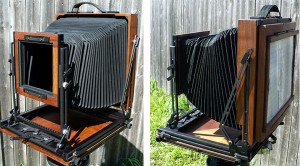 We joined a group of local LF photographers last Saturday for a gathering and group shoot at a local park. I have to say that we had a great time. Met some new friends and saw some old ones also. It was a fun time for sure and I am glad we were able to attend. There were nineteen people there and most every kind of camera you could imagine from DSLRs to 8x10s. There was most every level of experience, from beginner to seasoned pro. The talk was lively and the interaction was priceless.
I hauled an 8×10 camera, set it up with several lenses, and let those that were interested look and ask questions. The thing is, I did not expose a single sheet of film. I really had no intention of making an exposure. I was there to enjoy the interaction with like-minded folks. I was there to talk shop. This was a gathering organized for the purpose of letting the interested see what a view camera is and how it works. This is the best way to learn whether you should look more seriously into LF, or not. Working with a view camera is not for everyone. I would never recommend to anyone that they run out and buy a big camera.
I took film, just in case something did materialize, but I never put a holder in the camera. I, for the most part, had no intention of making photographs. Certainly there were some visually interesting things going on in the park, but I was not in the mode of making images. I was in the Left Brain Mode of talking about cameras and how they work.
 I heard, or maybe read somewhere, that “Amateur photographers talk about equipment. . . Serious photographers talk about photographs!” Personally, I am much more interested in photographs than cameras. A camera is just a light-tight box that holds the lens and film.
Certainly it is important to have the proper tools in order to be successful at anything you attempt. Matters not whether you are building a bookcase, fixing a leaky kitchen faucet or making a photograph. But to obsess endlessly over your tool belt is not necessary. Think of it this way. You take your dream vacation to some really far away place you have always dreamed of visiting. Would you come back and tell everyone all of the details of where you visited, or would you go into excessive detail about the airplane that flew you there?
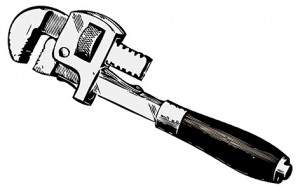
I defy anyone to look at a framed photograph hanging on the wall and tell me the camera, lens, film, or paper that was used. You would have to be a mind reader! Is the equipment necessary? Certainly! But equipment is only an apparatus necessary to reach an end. The camera is a tool, no more, nor no less, important than a wrench. All you really care about is that faucet in the kitchen stops dripping. Do you care about the name on that wrench?
What I care about is the finished photo on the wall. . . well. . . I have to admit that being out in the field searching for something to point the camera toward is also very important. But everything that goes on between those two moments is really of little interest to me, other than I having what I need to bridge the gap.
 Everyone that knows us has become accustomed to the fact that we travel in the winter. We have been on the road during the month of December for years now. We mostly travel to the great southwest and photograph the landscape in snow and ice. This year was no exception. We spent thirty days during the month of December 2009 and January 2010 in Utah photographing in deep snow and temperatures that never rose above freezing. But, that is another story that we will get into later.
This is a story of ongoing frustration and misery. Specifically, the misery of getting that PC laptop computer to work. We threw out our PCs in the office late last year and replaced them with new Mac boxes. What a breath of fresh air! A computer that works!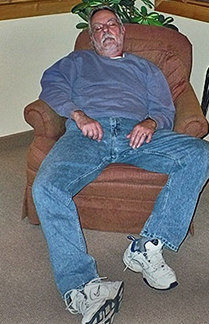
So, this trip we made the conscious decision that maybe we could use that old PC laptop one more time. We record all of our film and field notes using small digital recorders and download them daily to the laptop. We also each carry a small digi-snapper camera to make record photos and snapshots as we work each day. The laptop is also used to access the Internet and e-mail, since most every place we stay has access these days.
After a couple of weeks of frustration with the PC laptop never wanting to work and just being a complete waste of time waiting for it to decide to work, we gave up completely. Susan painfully and slowly, since she had to use the old PC, found the nearest Apple dealer and we took a day off to drive to Colorado to purchase a MacBook.
The experience was again what I would describe as a breath of fresh air! The thing just comes on and works! Instead of spending half an hour, or more, waiting and wondering if the thing is going to work, the Mac just comes on and is ready to go.
If you have ever been curious or tempted to look into Apple computers, all I can say is take a look. Go online, find an Apple Store, make an appointment and let them show you with a hands-on demo. The only regret I have about all of this is thinking of all of the time and frustration I have had to deal with in the past with M$.
And, if that was not enough to keep you busy, HERE is the link to the snapshots from our 2009-2010 adventures in Utah. . . Enjoy!!
 We would like to thank everyone that attended our presentation “THE ART OF B&W PHOTOGRAPHY” at the Lake Granbury Art Association meeting Monday evening. We had a full house and we hope everyone enjoyed themselves as much as we did. Special thanks to Bill Martin and Ron Hood for inviting us and making the arrangements.
A quick note, we will be having an exhibition of 25-30 photographs beginning November 18th and running through January 8th at the River North Gallery in Stephenville, Texas. Watch here for more information as we finalize the arrangements. As always, thanks to everyone for your support.
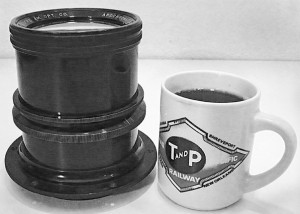
The only thing that should be larger than your coffee cup is your lens!
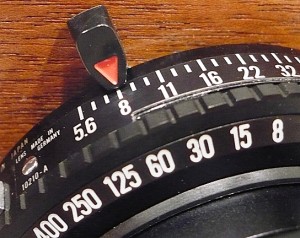 A friend e-mailed me the other day saying there was an interesting discussion about the quote “f8 & Be There” supposedly credited to Weegee, a.k.a. Arthur Fellig (June 12, 1899 – December 26, 1968) going around on the Internet. I have my interpretation of this quote, and it requires little thought on my part to understand what it means to me. But I guess in this modern day computerized world of digital everything, so called “photographers” have lost a connection to the basic craft of dedication, exposure and artistic vision?
The world we live in today is far too complicated. Made so by all of the choices and distractions we face every waking hour. One of the first real realizations of maturity is to realize you can never Have It All! You will never live long enough! You have to make choices as to what is important. You have to pick and choose what you really want and then stick to it. You cannot be an astronaut, a brain surgeon, a rock star, a movie star, and on, and on. . . Trying to Have It All, will only lead you to ruin. Having it all is an advertiser’s myth, created to sell you soap, cars, windows, insulation, ocean cruises, and imagined happiness.
So, what does “f8 & Be There” mean to me? Pretty simple. . . for me it is a term pertaining to photography and simply means if you want to be a photographer you have to make the decision a conscious choice.