Film

MIXING YOUR OWN

MIXING YOUR OWNI have always been an advocate of vertical integration. The more you can do yourself, the better control you have of the outcome. For many years I used prepackaged photo chemicals and have never had a problem. But, as the traditional darkroom and the materials used become more and more an alternative process, commercially available photo chemicals are getting harder to find. Some favorite chemicals have vanished. An old favorite, the Zone VI line of print developer, fixer and hypo are now gone from Calumet. I recently witnessed 8 bags of print developer and 2 bags of print and film fixer selling for $127.50 on eBay. That is well over double the original cost from Calumet.

The bottom line is, you can mix your own photo chemicals. Sometimes, if you purchase bulk raw chemicals, you can even save a few dollars. Another plus to mixing your own is the fact that you have 100% control. If something goes wrong, you know who to blame. You can also modify the formula and experiment. Mixing your own photo solutions is not hard. It is not rocket science and you do not have to be a chemist. If you can follow a recipe and bake a cake, you can mix your own chemistry for the B&W darkroom.MIXING YOUR OWN
The first thing you need to understand is that in order to mix your own photo chemistry you will be handling CHEMICALS. If you are not comfortable with this thought, do not even go there. But, remember that you are surrounded with chemicals. . . the entire planet is made of them. If you take proper precautions and are careful, there is nothing to fear. I am not a chemist, so I have little understanding of deep details and I have even less inclination to study chemistry. Do as I do, assume that everything you handle in the way of raw chemicals are toxic. Do all mixing in a well-ventilated area. Clean up spills immediately. Avoid breathing airborne powders. Always wear gloves and purchase a respirator with proper filter. A little common sense goes a long way.
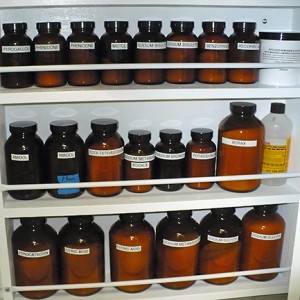
MIXING YOUR OWNAs I said before, for me, mixing photo chemicals is nothing less than following a recipe.

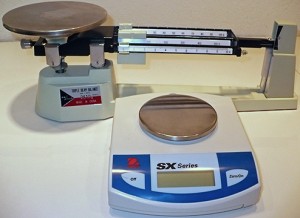
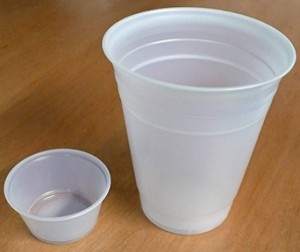
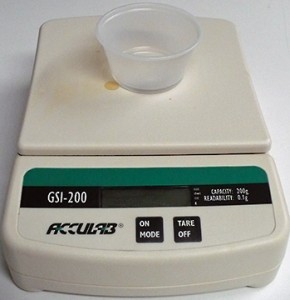
When mixing any photo chemistry formula/recipe you need to accurately measure all of the various chemicals. Most formulas call for dry chemicals measured in grams and liquids in milliliters. I have two scales for dry measure. I have a very accurate digital scale for small quantities and an old-fashion triple beam for larger amounts. I picked up a box of small serving containers at the local big box store to be used as disposable containers for measuring small amounts of dry chemicals. I also have larger 8oz plastic cups for larger amounts. Be sure to use the tare function to zero the scale with the empty container before measuring. Zero the scale with every new container, they do not all weigh the same. Once used, I toss them in the trash. I never reuse one of these plastic containers. This assures there is no chance of unwanted contamination.MIXING YOUR OWN
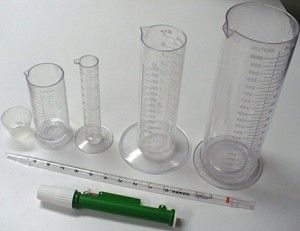
For liquids, I use an appropriate size graduate, and for small quantities, a pipette is the easiest way to make accurate measurements. You can use a pipette pump to make loading and measuring easier, or just dip the pipette into the container and hold your thumb over the end. Remember to always thoroughly wash the pipette after use and always use a clean pipette when going from one chemical container to the next. If the pipette is not properly cleaned, you will cross contaminate your chemicals.

Always follow the chemical formula. Most all formulas are mixed in water and there should be a temperature specified to insure the chemicals dissolve. Always mix in the exact order as called for in the formula. Add each ingredient slowly and continually stir until each is completely dissolved before adding the next. This is where a magnetic stirrer comes in handy. Take your time. Do not rush the process. Some chemicals take some time to completely dissolve.
MIXING YOUR OWNI use distilled water for all stock solutions. I always use distilled water for stock solutions and processing film. Unless your tap water has known problems, it should be fine for mixing printing chemicals.

Once properly mixed, store each formula in a clean bottle with a plastic cap. Never use metal caps, some chemicals will cause them to rust and contaminate the solution. Brown glass is best for developers and plastic should be fine for most others. Be sure to label each container as to its contents and also include the date mixed. Most all stock chemicals are good for three months, some much longer.

There are many published formulas. Some popular commercial formulas are proprietary, but in many cases there are alternative, similar formulas that are published. By applying a little experimentation, you can tailor your photo mixtures to suit you. Search the Internet for formulas and pick up a copy of “The Darkroom Cookbook” Third Edition by Steve Anchell.
Mixing your own is not that difficult. With a little study, careful handling, forethought and experimentation you can mix your own photo chemistry.

Here is a list of things you will need or may want to have;

• disposable gloves
• respirator
• apron
• a selection of required chemicals
• accurate scales
• disposable plastic cups for weighing chemicals
• several sizes of graduates for liquids
• stirring rod
• magnetic stirrer
• pipette
• pipette pump
• glass storage bottles
• plastic storage bottles

Resources:

Bostic & Sullivan
http://www.bostick-sullivan.com

Artcraft Chemicals Inc.
http://www.artcraftchemicals.com

The Darkroom Cookbook Third Edition by Steve Anchell
http://www.steveanchell.com

Pyrocat HD a semi-compensating, high-definition developer, formulated by Sandy King.
http://www.pyrocat-hd.com

The Book Of Pyro by Gordon Hutchings

JB

jbhphoto E-Books

Posted by JB Harlin in Darkroom, DIY, Film, Formulas, How-To, Photography, The Darkroom Workshop

THE DAY KODAK DIED. . .

Is it over for Kodak?  Who knows for sure?

Posted by JB Harlin in Commentary, Film, Photography

A PLACE TO STAND

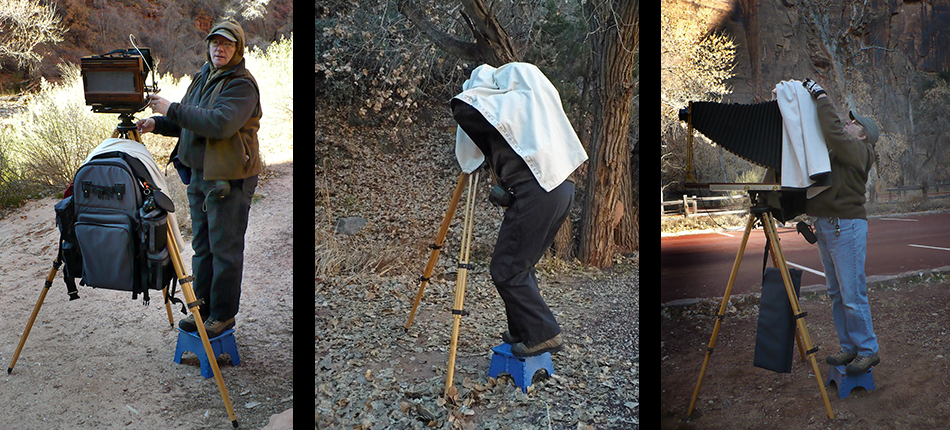
Ever found that once you have your camera in just the right position that you can’t quite see the very top of the ground glass. It is important to get up there so you can see if your foreground is in focus. Never fails, you need just a little more to get a good view. Well, we found a neat accessory that just may save the day for you.

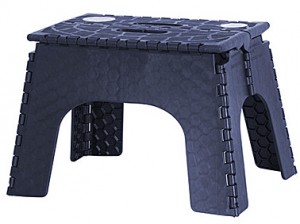
We discovered a nifty little folding step stool at Wal-Mart. We hauled a couple of these with us on our last trip and though I never used mine, Susan found it very helpful with several of her photographic efforts. It was especially useful for her and the pano format cameras she uses.  She made use of the step several times when she needed a little height working with difficult setups.

Here is more information from the Wal-Mart web site;

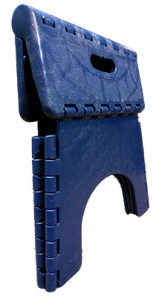
Keep everything within reach with the Mainstays 12″ Folding Step Stool. This skid-resistant step stool gives you an extra boost to reach high shelves or cabinets. It folds down to two inches thick for easy storage.

Mainstays 12″ Folding Step Stool:
Easy to carry
Skid-resistant top and feet
Stands 12″ high
Folds to 2″ thick
Weight capacity: 300 lbs
Folded Size: 13.5″ x 12.5″ x 2″
Weight: 2.5 lbs
Wal-Mart No.: 007126355

This 12″ step folds up and is easily tucked away till you need a little boost.  This is another accessory that is a life saver when you need it. We ended up purchasing several of these for use around the house also. You never know what you are going to find when you are out poking around in the stores.

JB

Posted by JB Harlin in Film, How-To, Photography

CLEANING FILM HOLDERS

Dust is forever the biggest enemy of the large format shooter. Seems that no matter how meticulous you are, that one little speck of dust sneaks in and plants itself right in the middle of some nice smooth area. . . like the sky. It is a never-ending battle and requires continuous attention.

It is obvious that you need to keep your camera clean and it is imperative that you vacuum out all of your film bags and equipment cases. Dust gets everywhere, and it is good practice to vacuum everything before you go out to photograph. But, there is one area we have found to be extremely important for dust control, and that is keeping your film holders clean.

We have found that a thorough cleaning of every holder just prior to loading film keeps the dust problem to a minimum. If the inside of the holder is clean, then the outside is the only place where dust resides. Realize that the most critical time is before and during exposure. If a dust speck gets on your film after exposure, at least it is no longer a threat for making the dreaded pinhole which leads to the black spot on the print. After exposure, the worst a dust speck can do is possibly scratch the film during handling.


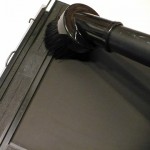
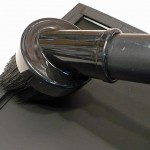
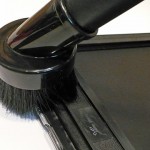
Everyone has their own methods for cleaning and loading film holders, and here are my main concerns and how we prepare our holders for loading. I will begin by saying that every holder is cleaned and inspected just prior to every loading session. Even on the road, we never load a holder with fresh film without cleaning. My biggest concern is dust inside the holder. I want the inside to be as clean, and dust free as possible. No matter how clean your film bags and cameras are, dust will always settle on the outside of the holders. If you thoroughly clean the inside of the holder, you will have a better chance of keeping the film dust free. I begin by cleaning the work surface with a damp towel and after dry I vacuum the area just to be sure. I always use the round brush on the end of the vacuum hose and before attaching I vacuum it well to make sure the bristles are free of dust.

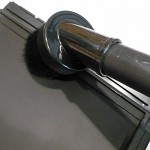
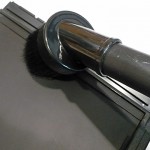
I work each holder individually and begin by vacuuming the entire outer surface of the holder with the dark slide still in place. I pay particular attention to the entire area around the parameter of the holder where the slide meets the holder. I want the exterior of the holder as dust free as possible before I remove the slide.

One area that collects dust is the light trap area. Any dust on the dark slide will be wiped off by the felt in the trap. It is imperative that the dark slide be completely removed and the light trap vacuumed thoroughly. Also, while the dark slide is out of the holder, I vacuum the inside of the holder and the entire parameter, paying special attention to the film hold down and dark slide slots along the sides. I open the loading flap and vacuum under it also. The last thing I do before reinserting the dark slide is vacuum both sides of the slide and inspect it for dust or any possible damage. Each dark slide is removed, one-at-a-time, and always replaced in the same side of the holder. I never mix up slides, they always go back into the same holder and same side. . . always!

Once the holders are cleaned we immediately load them with fresh film and place them into their film bag. It is a good idea to vacuum the film bag before placing newly loaded film holders back inside. This is a good idea, especially if you have been in a particularly dusty area.

This is the ritual we go through every time we load film and we have little problems with dust on our film. Everyone has their own way of doing things and this is the procedure we use when loading film. There are a few things that we have found that greatly improve the odds of keeping your film clean. Remember, the vacuum is your best friend when it comes to dust. See my previous post titled “DUST. . . A Four Letter Word!” for more information.

JB

Posted by JB Harlin in Darkroom, Film, Photography

SAMPLE GALLERY VIEW CAMERA PHOTOGRAPHY BY JB & SUSAN HARLIN

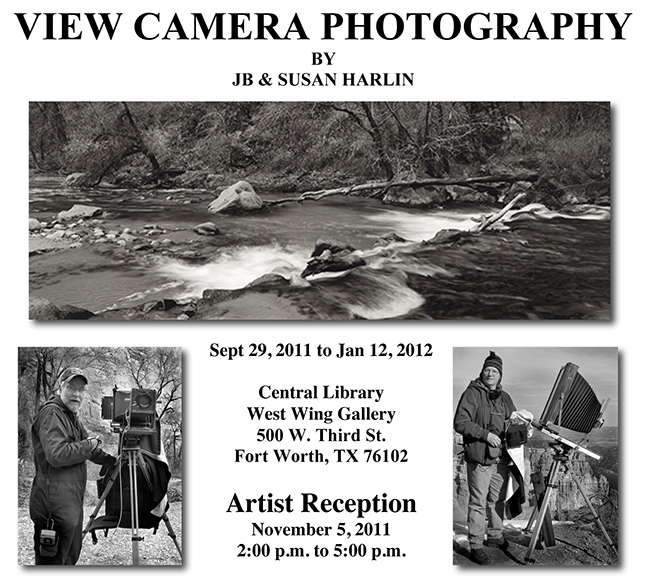
For those that are planning to come to our current exhibition and those not able to visit, we have created a sample album which contains a few of the 28 images on display. Do not forget to mark your calendar for our reception Saturday, Nov 05th.


VIEW CAMERA PHOTOGRAPHY BY JB & SUSAN HARLIN

Posted by JB Harlin in Events, Film, Photography

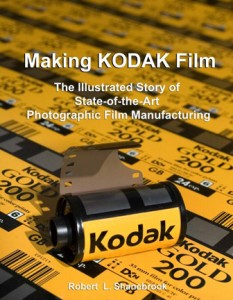
AN INTERESTING BOOK “MAKING KODAK FILM” by Robert L. Shanebrook

I have always been a collector of books, and I have always been interested in how things are made. I am especially fascinated with large industrial manufacturing processes. Photography is also more than a fascination for me, it has become my prime interest. I have little interest in the chemistry and mechanics beyond knowing how to make things work, yet I am still fascinated with how things are made. I ran across an interesting book a while back, put it on my list of things I needed to check out, and promptly forgot all about it. Typical for me, but thankfully I did remember the book and ordered a copy.

If you were ever curious as to how photographic film is manufactured, then I can highly recommend a great book on how Kodak makes film. “Making KODAK Film; The Illustrated Story of State-of-the-Art Photographic Film Manufacturing” by Robert L. Shanebrook, is a book I can suggest to answer the majority of your questions about  what goes into manufacturing film. I will quote from the author’s web site;

MAKING KODAK FILMInformation in the book

The book was compiled based on my personal experience plus the input from Kodak experts. Kodak provided access to Kodak Park and assigned experts to the project. Typically the experts explained the operation to me and then accompanied me as I photographed. After I retired I spent over forty days photographing in Kodak Park and many more days in discussion.

In addition, I was aided by input from 24 Kodak retirees. In most cases the retirees were the predecessors of the current Kodak experts that helped me. I also utilized the advice of ten experts from outside Kodak. To insure accuracy the manuscript was reviewed by many of the people that provided information used in the book.

I am grateful to over ninety people who helped me with the book.

Author

Bob Shanebrook graduated from Rochester Institute of Technology and worked at Eastman Kodak Company for 35 years before retiring in 2003. At Kodak he worked as a commercial photographer, researcher, product development engineer, film manufacturing manager, and for over twenty years was a Worldwide Product-Line Manager for Kodak Professional Films. He was involved in nearly all aspects of Kodak’s black-and-white and professional film business.

I highly recommend this book to anyone interested in learning about the art and craft of film manufacturing. For me this was a slow read since the book is mostly photographs. They say a picture is worth a thousand words, with some of these machines, it may be more like ten thousand.

Mr Shanebrook has self published this book and I can recommend it is a good one. . . two thumbs up from me. A great read if you are interested in just how complex the film in your camera is to produce. More information and how to order a copy from the author can be found HERE.

JB

Posted by JB Harlin in Film, Photography

D/FW LFG WEEKEND

The D/FW LF Group had another exciting weekend, with two gatherings. Saturday we started off with breakfast at the Original Pancake House in Grapevine. We had ten people join us for the beginning of a usual gathering. After breakfast we then adjourned and moved over to the Grapevine Convention Center for the Camera Show. This one was a productive one. I found several things including some raw chemicals for the darkroom. Susan and I actually made several trips to the van to unload our trappings. Larry made even more trips and needed some help. What fun!

Sunday it was an early trip down to County Road 1118 in Johnson County to photograph a very old iron bridge on the Brazos River. If I counted correctly we had eight people that showed up before, and some after sunrise. Beautiful morning, not a cloud in the sky, not a breath of wind, and it was in the upper 40’s to mid 50’s. Couldn’t have been better for such an outing. As usual we migrated mid morning over to Glen Rose for a late breakfast, early lunch at the Big Cup Cafe. Outstanding hamburger and by a little after noon we were home. Susan and I shot a few 4×5 negatives and, as usual had a great time.

We will be planning more outings and if you are interested in joining us, please watch for our next gathering.

JB

Posted by JB Harlin in D/FW LF GROUP, Film, Photography

WRITING ON THE NEGATIVE EDGE

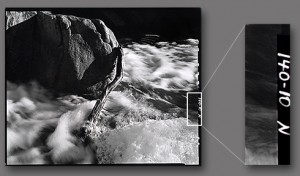
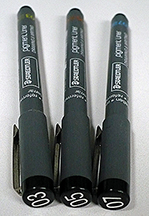
WRITING ON THE NEGATIVE EDGEI was recently asked what type of writing device we use to mark the catalog number on the edge of our film. I had not given it much thought since we have been using the same pens for marking film for many years. I have heard of people using various mechanical pens and India ink. Some say they use a common Sharpie. There are numerous ways to do this, but the easiest and most effective way I have found is to use a pigment liner pen.

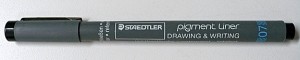
Specifically, I have used a Staedtler pigment liner pen for years. They are clean, easy to use, make very dense letters and numbers that easily show up on proofs, and are filled with permanent black ink. The ink used is lightfast and will not fade. One nice thing about the Staedtler pigment liner pen is it will not dry out. The manufacturer says, “The unique cap-off feature of the ink enables pens to be left uncapped for 18 hours without drying up. Even when left open during long breaks in writing, they remain ready for action without delay.” They also last a long time. We have not had to buy new pens in years.Staedtler pigment liner pen

The Staedtler pigment liner pens are available in nine writing widths from 0.05 mm to 0.8 mm. My favorite sizes are the 0.3, 0.5, 0.7 mm widths. I use the smaller diameter pen for small film where the clear edge is very narrow. You still get very legible writing along the film edge that prints well on the proofs. I prefer the larger diameter pen for the really big film. These have worked well for me for over 30 years, and should work well for you also.

Staedtler pigment liner penHere are a few things I have learned over the years that may help when using these pens to mark your film. I always mark my negatives on base side opposite the emulsion, this way the file number prints correctly on the edge of prints and proofs. Be sure to let the ink dry thoroughly before you place the film into a storage sleeve. It should only take a minute to dry. I have found that if you make a mistake, you can remove the ink using a cotton swab lightly moistened with acetone. And, one more thing; the biggest mistake you can ever make is not using a filing system for your negatives. If you choose to mark your film on the edge, these markers will do the trick.

If you are interested in learning more about Staedtler pigment liner pens, HERE is their web site.

JB

Posted by JB Harlin in Film, How-To, Photography

STOP & FIX WITH STAINING DEVELOPERS

STAINING DEVELOPERSAs most know by now, we use staining film developers. To be specific, we use the classic PyroCat HD formula from Sandy King. This developer gives us the type of negative we like. Keep in mind that creating art, no matter what may be your chosen medium, is a very personal thing. What works for me may very well not be at all acceptable to you. My father used to say, “that is why they paint cars different colors.” Personally I do not care for red cars.

All of that said, I have experimented with numerous staining developers and have chosen the one that works best for us. Along my journey of research I have found many opinions and myths that I have found to just not be true. Everyone seems to have an idea of what they believe to be true, but few have actually gone to the trouble to, as Fred Picker would say, TRY IT.

One area of great debate when it comes to staining developers is what stop and fix is appropriate. I find that this is not that great an issue and even John Wimberley agrees. Just in case you have not heard of John Wimberley, he is the father of modern Pyro developers. Even Gordon Hutchings the father of PMK, and author of “The Book of Pyro” was preceded by Wimberley and his first modern formula, WD2H. From an article titled “PyroTechnics Plus: Formulating a New Developer” in Photo Techniques magazine, March/April 2003, Wimberley has the following to say about Stop Bath and Fixer:

“Myths abound concerning the correct stop bath and fix to use with pyro, but it is not a critical issue. Either an acid or plain-water stop bath may be used, and any standard or rapid fixer is acceptable. . . However, avoid hardening fixers. I recommend the manufacturer’s minimum recommended time to avoid the possibility that sodium sulfite in the fixer might weaken the dye mask.”

Wimberley goes on to say that you should follow the manufacturer’s suggestion as to the proper stop for any type of fixer. If you use an alkaline fixer, use a plain water stop, or follow the instructions. He also says Hypo Clearing Agent (HCA) should not be used, since they are mostly sodium sulfite and “the enemy of the dye mask.” He recommends a 10 minute wash time in running water sufficient to complete five changes of water by volume.

If you do much research on this subject, you will find a lot of differing opinions. The thing is, you finally have to draw a line and choose what you intend to do with your processing procedures. So, having said that, here is the way I process film using PyroCat HD.

• Film is processed in open trays by the shuffle method
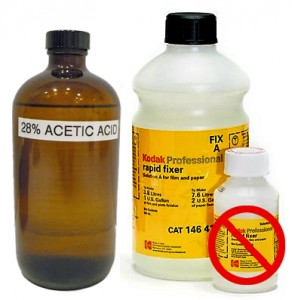
• Acid stop using 3ml 28% Acetic Acid plus 1,000ml water
• Fix in Kodak Rapid Fixer (no hardener)
• Rinse in running water 2-3 minutes
• Wash in a vertical washer 15-20 minutes
• Bathe in 2 drops wetting agent plus 1,000 ml distilled water
• Hang to dry

This is how I process film using my chosen staining developer. I am sure there are those that will point out all of the reasons this will not work, but I can assure you, it works for me. The most important thing to do is to be consistent. If you do things exactly the same every time, there is a very good probability that you will see consistent results. Fred Picker would say, “different is not the same.”

Remember, the best thing you can do is finalize your procedures and get on with creating your art. The finished print is what is important, how you get there should not get in the way of your creativity.

JB

Posted by JB Harlin in Darkroom, Film, Formulas, Photography