06
Nov
2013
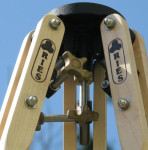 Susan and I are honored to have been chosen to be two of six judges for the first Ries Photo Contest sponsored by Ries Tripods. The sponsors hope to make this an annual event and that all depends on you entering your photographs. The theme of this contest is “HANDS” and is open to artistic interpretation.
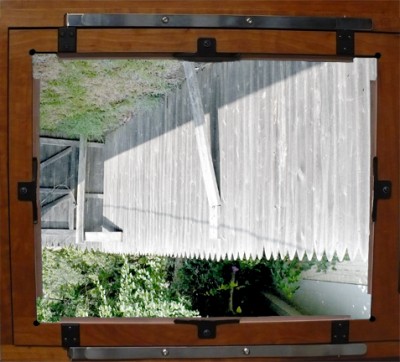 Seems that a large view camera always attracts curiosity. Everyone either gives you a long wondering look or asks questions about that big box on a tripod. Mostly they want to know how old the camera is and if you can still buy film. Is that a Hasselblad is a question that comes up from time to time?
For those that are truly interested, a peek under the dark cloth is always a good way to confuse them even more. The first thing they do is stick their nose right up against the ground glass. With that point blank view you see nothing. I have to explain that they need to back up. That it is like looking at a TV screen. After getting a good look they suddenly realize everything is upside down. I have to explain that it is also reversed left to right. Comments range from silence to questions about how can you do anything when the world is upside down and reversed? I usual just say that you get used to it and it becomes part of how you and the camera work.
The truth is, nothing will improve your overall composition more than looking at it upside down. It is a way to trick your left brain into shutting up and allowing your right brain to take over. The left brain is your engineering side. . . it deals with facts and figures. Your right brain is the creative side. . . it deals with form and shape. We are taught from an early age to be left brain dominant, so we get used to ignoring our creative side. The quickest way to shut your left brain up is to show it something it cannot readily identify. With the composition upside down, the right brain is in its natural environment and unimpeded by the chatter from the left side.
>With the inverted view on the ground glass it seems that the subconscious sees things that the conscious mind does not pick up on. I see things on the ground glass that are interesting, they have absolutely no meaning, yet there is something inside that says this is something of interest. There are abstract images that I have made that did not register until I looked at the proofs. There are times that something just calls out to be framed and photographed. It may have no rhyme or reason at the time of exposure, but later becomes something of great interest, even something totally different than originally envisioned.
Do not be afraid of the inverted image. It is one of the most powerful assets you have when making photographs. You will quickly get used to seeing things this way. It rapidly becomes part of your connection to the camera and your subject. Do I recommend you get one of those reflex viewing hoods that turn things back around? Absolutely NOT!
JB

 I was recently reading about creativity, and I was captivated by a chapter titled, “THOUGHTS ON CREATIVITY” from the book “The Art of Photography: An Approach to Personal Expression” First Edition 1994, by Bruce Barnbaum p. 141. He touches on things I have seen but have never really understood.
Barnbaum says that in Western art creativity is all about originality, where Eastern, or as he calls it “primitive art” is more about traditional methods of the original masters. He talks of how the primitive artist works toward the quality and style of the ancient masters, and how any departure is not acceptable in their culture.
Barnbaum goes on to talk about how the primitive art mindset is not in fashion, nor acceptable in Western art. How working in the style of past masters is seen as, “redundant, hollow, and meaningless.” He talks of how even using past known techniques is looked upon as mere “copies” and are deeply frowned upon. He further says that working in the style of past masters is “a good learning experience” yet is not accepted as anything of worth by Western civilization.
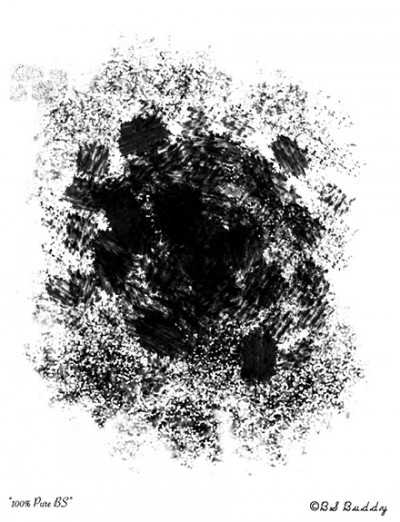
I see this a lot in our Western culture. Someone takes a hand full of cow dung and throws it at a canvas and it immediately becomes a fresh new art form. Personally, all I see is BS. I have to admit that there are a lot of things I do not understand. Jazz is another thing I can’t comprehend. . . several people all playing something different at the same time is not music to me. But, that is my personal take and mine alone.
I love the work of the past masters of photography and I fully intend to continue to produce my work in that style. It is what I like, and if you don’t please yourself, you are not going to be convincing to anyone else. Guess I will kick back and put on some Pink Floyd and contemplate making some more primitive photographs. . . maybe some more of those redundant, hollow, and meaningless copies.
So, you can call me PRIMITIVE. . .
JB
 I was recently involved in a very serious discussion about photography. I was informed that the trend in photography today is for B&W prints to be light and airy. I was told that the deep blacks and brilliant whites I love so much are reminiscent of photography of the 1930’s and 1940’s and is not ‘in’ today. I was also informed that today’s trend is all about color images. I was given the impression that B&W is, in this so-called ‘modern’ world, sort of an ugly stepchild. At least, that was the impression I was given after a conversation with someone that is supposedly an ‘expert’ in the field.
Personally I have never been one to adhere to the current ‘trend’ or ‘fad’ nor do I give a rat’s rear about whatever is ‘in’ today. I have no interest in what is popular, nor in fashion. To be an artist you have to, first and foremost, be true to yourself. If you pander to the wishes of others, you will do little more than chase your tail trying to please everyone else. What is most important is to cater to your own vision. Truly meaningful images only occur when you have an internal connection to what you are photographing. If you are following some sort of fad, or the perceived wants of others, all you create are hollow nothings. This is what advertising photography is to me. I look at the images in magazines and TV commercials and all that is there for me is something visual to catch the eye for the purpose of selling something. My personal definition of salesmanship is, convincing someone to buy something they don’t want, don’t need, and can’t afford. I want nothing to do with this mindset. But I digress from my original thoughts.
I have a different view as to how I want to present my subject. I really wish I could find another planet to photograph. I want to show a world that is unseen by human eyes. This sort of thing being impossible, I have to resort to finding things that I can interpret in such a way as to portray them as otherworldly.
JB
 We have recently discovered that Ries Tripods has been sold and is now in full operation under new owners. Though the new company, Ries Productions LLC, may be a new startup, the new owners are in reality those that have operated the company for the last 16 years. The new company is located in Bremerton, WA in a newly remodeled facility. In a recent exchange of e-mails with the new owners here is part of what they had to say about their new company;
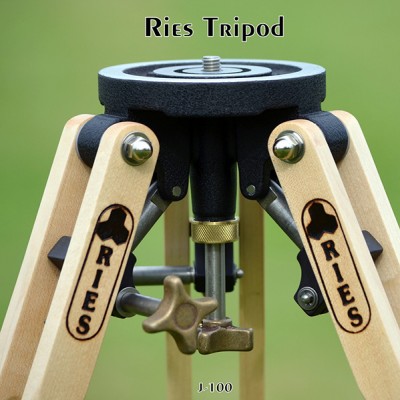 Over the past year, we’ve been blessed with a city government that was very helpful in the remodel of our new building and factory. Now that we have the capability to design, work with the CAD & CAM and have the new mill & lathe we’re no longer tied to the old castings and we are starting to move forward. We’ll be sending out emails to our customer that we have email addresses for as we introduce new products. For example, we will be laser engraving the Ries logo now instead of branding the legs. The coming months will bring announcements of custom lens boards, film holders, camera mounts, and film changing tents that will mount within the legs of the tripod.
It is extremely encouraging to see an old established company continuing to expand, headed by people that care about their customers and their products. Ries Tripods was founded in 1936 and has established itself as the workhorse of the photographic tripods. We use both the ‘A’ and ‘J’ model Ries tripods, and would not consider anything else for our LF and ULF work. HERE is a video of their new Haas CNC machine making knobs.
Also, Ries Productions LLC recently sent out this mailing;
There are 167 million Big Game viewers. And they’ll all be watching my small business commercial on the 2014 Big Game. How am I going to get an ad on the Big Game, you ask? Easy, with your help, I’m going to win it from Intuit.
Intuit is giving a small business a TV commercial on the Big Game. I want that ad to belong to my small business. You can help make it happen. Just click here to vote for my business: http://intuit.me/17dpVYZ.
JB
 This has been a really great long weekend for us here in the D/FW area of Texas. John Sexton and his wife Anne Larsen came to Dallas for the opening reception of their joint exhibition at the Sun to Moon gallery, to hold a one-day seminar and an enlightening lecture, including a poster and book signing at Richland College. We are proud to say we attended all three events and had a wonderful time.
It was great to catch up with John and Anne. We feel so fortunate to be able to spend two days saturated in photography. John is one of my favorite speakers and maybe I should say favorite photography speakers. His stories of working with Ansel Adams are always informative, interesting and funny. He is also a never-ending wealth spring of knowledge. He shares my deeply-felt philosophy of not having secrets. I believe I first heard, never photograph with anyone that has secrets, from Fred Picker, but I can assure you that John and Anne share this view. They also radiate an enthusiasm for photography that is contagious.
Susan and I, and the Metroplex as a whole, are certainly fortunate that John and Anne were able to visit and we hope they will be returning soon. Though, it might be well advised that they plan their next visit during cooler weather!
Again, Thank You John and Anne for a wonderful long weekend and we hope to see you both soon!
JB & Susan
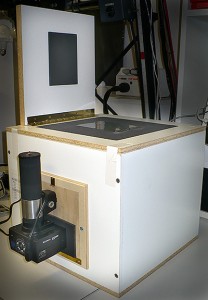 Film testing is one of those things that is just a fact of life if you, like me, choose to continue to pursue that art form. I am no fan of any testing, that is for sure. But, there are times you have to test in order to better understand how things will work.
I never thought I would ever need a sensitometer, but never say never. To compare different film developer formulas, I found that I needed to run some tests. In order to make the test I needed to expose numerous sheets of film and expose them all identically. What I needed was a film sensitometer. What I did was build one. This project was not as difficult as I first expected and most everything I needed was laying around, either in the closet, or the junk box.
I wrote abut my experience designing and building a DIY Sensitometer back in 2009, then shelved the article where is has remained dormant since. Well finally, I drug the thing out and put it up on our web site. Interested in learning more about building a film sensitometer? Head over to the ARTICLES & HOW-TO area of our web site, scroll down the page to the link titled, “BUILDING A FILM SENSITOMETER.” You will see how I did it, and you may just want to try it yourself. . . if this is something you have a need for.
JB
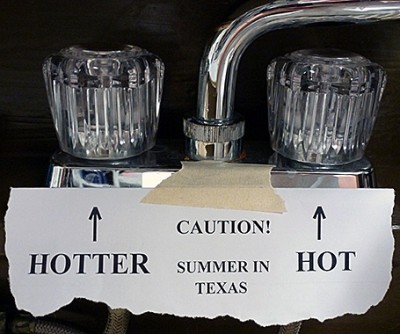 Yes, hot water is nice, but not when it comes out of the cold tap in the darkroom. Guess since the beginning of photography all wet processes are assumed to be run at 68F. Personally I have nearly always ran everything at 70F. This seems to be a good compromise since we live in Texas, where in a 12 month year, summer is 18 months long. Personally, I don’t care for temperatures to be much above 70F outside, but what can you do?
The cold tap here runs up near 88F by August, and for many years I dealt with that by freezing plastic bottles filled with water. Works well enough, but is still a hassle. Finally about 18 years ago I decided to look into a water chiller for the darkroom. I have to admit that I did try the coil of copper tubing in a washtub of ice water. Works to some degree, but is a mess to deal with. What I wanted was a no-muss, no-fuss way to chill the water to a manageable temperature.
So, you say you want a water chiller? That really is not a problem. There are commercial units that will provide very high volumes of chilled water. Problem is, they are large and expensive. So, like most things I had to find a balance between useable and practical. Everything is a tradeoff of some sort. I did a lot of research and eventually decided, based upon the limiting factors I had to face, that a small ElKay remote water chiller would be satisfactory. The unit I settled on was their Model ER101Y, which is rated as a 9.6 GPH (Gallon Per Hour) remote chiller. The unit was small enough to fit under the darkroom sink and ran off a 115 volt circuit. 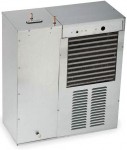
Now, the bottom line is, how well does this work? I have to admit it is not perfect, but it is certainly better than nothing and much better than anything else I had tried. The setup is very simple. I have a Calumet/Lawler mixing valve that in winter, when the cold tap is in the 50-60F range works very well. By adding the chiller in the summer I can keep a steady 70-72F wash water with cold tap up toward 85F, with a flow rate of about 0.75 GPM for as long as I need. This is plenty good enough for washing film or paper. We mostly process paper in the summer anyway, and when the tap gets to 88F the wash water goes to about 75F.
Not everything is perfect though. I would really like to run any flow rate for any length of time, at any reasonable cold tap temperature, but it will not happen with this small of a chiller. That would require more horsepower. Another thing to think about is the heat generated by the chiller. I had to add a powered wall vent next to the chiller to keep the room from heating up. The ultimate would be to vent the unit outside, but that isn’t practical for my location. . . so I just have to deal with it as best I can.
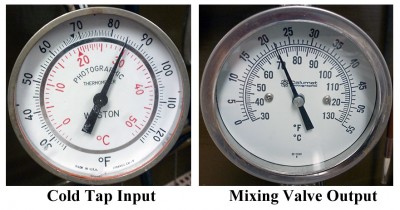
At least I do have a chiller and it does work. When I get ready to process film or print, I will fire up the chiller and allow it to cycle. This normally takes about fifteen minutes. I can then fill my washers, but I have to watch the temperature closely, because at full flow the chiller will run out of cold water pretty fast. When I see the mixing valve temperature start to rise, I will shut off the water and wait for the unit to cycle again.
Bottom line is, I would not want to be without my chiller. If I had the choice, I would upgrade to the larger ElKay ER191, which is a 19GPH unit. It would fit in the space now available. The original sink I installed the unit we have on did not have room. If I were going to suggest a chiller, I would say get the 19GPH unit. But do keep in mind that any chiller is better than none!
JB