 I have received several inquiries as to how we handle film when traveling. Our photographic outings typically last anywhere from two weeks to well over a month. We each shoot several different formats and we usually shoot a lot of film. We do not process film on the road since it is not practical to work with LF and ULF film anywhere but in our darkroom. So the question comes up, how do you handle several hundred sheets of exposed film when traveling?
First I have to say we keep meticulous notes on every negative we make. Everything from exposure, to location, to time of day is recorded on a small digital voice recorder. Every sheet of film gets an entry detailing all pertinent information. Search here on the jbhphoto.com BLOG for previous posts about our record keeping in these entries; “KEEPING NOTES” and “PRINTING NOTES & CATALOG.”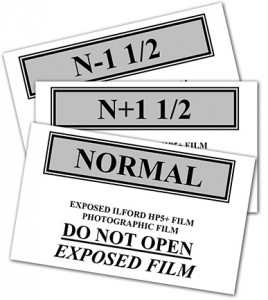
We only have room to haul just so many film holders in each format. So it is always necessary to carry fresh film and to reload holders on the road. Depending on how much we shoot on any particular day, we may reload every evening, or we could go several days before having to reload. Obviously we carry fresh film and empty boxes. How much film? The rule of thumb is to carry twice what you think you will shoot in any format. How do you know? Experience is the only answer to that question. If in doubt, throw in another box just in case. All I can say is we have never ran out of film on any trip. We always come home with unexposed film.
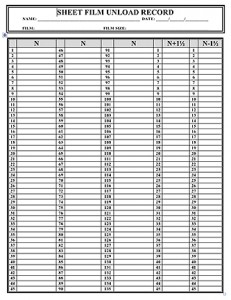
When reloading becomes necessary it is important to be able to sort the exposed film into groups that require the same developing time. We have printed sheets for unloading film. When it comes time to reload, we go through our audio notes and record the film holder numbers into columns that denote the development of each sheet of film. Once we have the sheet filled out, it is just a matter of locating the holders and arranging them in piles before unloading.
 We do not practice anything very exotic when it comes to film development. We expose with the intention of one of three development times for any particular situation. Each sheet of film is exposed to be processed either Normal, Normal +1 ½, or Normal -1 ½. That is it. . . we need three sets of empty film boxes for each format, each labeled for the appropriate developing time. As we load more film we empty more boxes that are then used to unload more exposed film. We carry labels that we print off before we leave and affix them to the boxes as needed. The labels denote film developing time and that the box contains exposed film.
We also carry a handful of large rubber bands. All boxes, whether exposed or unexposed are held closed with two rubber bands. This is insurance against a box coming open or accidentally opening the wrong box. In our scheme, any box with rubber bands on it contains film. . . Do Not Open!
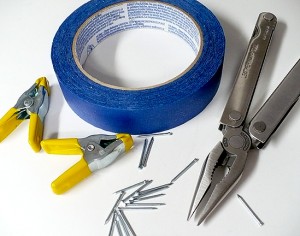
We carry a large Harrison tent, but I hate using it. So, we also carry spring clips, small nails, a hammer, tape and blackout material to cover windows as needed. We can nearly always find a bathroom or other room that is easily transformed into the temporary darkroom for film handling. We also carry a small folding table which comes in handy at times. Dust is always a problem when loading film. We carry a small field service vacuum, see the BLOG entry titled “DUST. . . A Four Letter Word!” Every holder is vacuumed, inside and out, every time we reload.
When traveling and shooting LF and ULF you have to be creative and prepared. This entire process is much more difficult to explain than it is to put into use. You just need a little forethought and planning. Traveling with film is not that difficult.
 What is in a name? Interesting question for sure! There are times that a name has little meaning, other times it can be the key to an empire. Companies spend untold sums of money in the creation of a name for their products. Their chosen names are trademarked and protected by law. Some names are household words and are part of our everyday life. There are times when a name is extremely important.
 This is my choice and has absolutely nothing to do with anything other than it is what I feel correctly reflects the different types of photography. If you have chosen to be a digital photographer and work in that medium, why be ashamed of it? Same if your work is produced by the hybrid method. Why not be proud enough of your chosen medium to accurately define it and not hide behind the general, and now somewhat vague, idiom of Photography? Just keep in mind that none of these three categories are the same and none is a replacement for any of the others. Each is simply its own art form and they all fall under the general category of Photography.
 Back in February 2009 I posted an entry titled “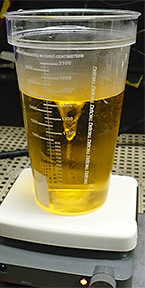
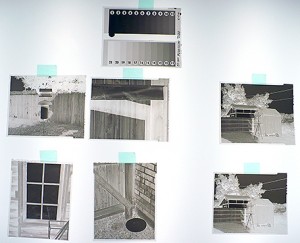
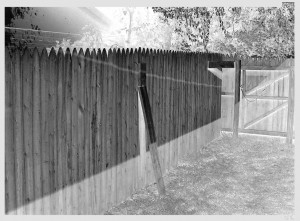



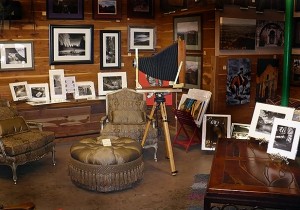

 We hope that everyone has survived the heat of summer and are ready for a little cooler weather and maybe some photography. We have several events coming up beginning this September. We have an exhibition of thirty of our latest photographs coming up at the Langdon Center in Granbury starting next month.
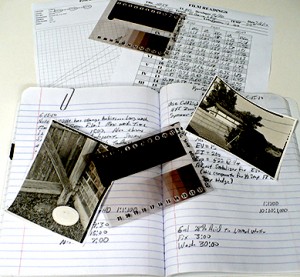
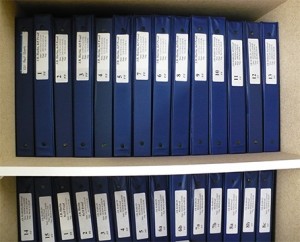 In the last entry I talked about making film notes in the field. That is the first step in the process of record keeping. I didn’t mention the last step which is negative storage. Each negative is marked on one edge with a unique number, then inserted into a clear sleeve then into an archival envelope. Each envelope has the negative number written on the upper edge. The envelopes are then placed into archival boxes, which are labeled with the contents. Also, the smaller film is proofed on our standard paper. These proof sheets are punched, and filed in binders. That pretty much sums up the negative end of the process.
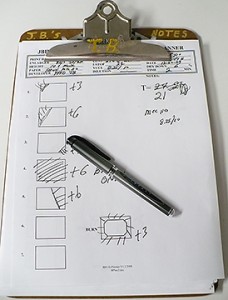 we use to record the process. We make our own print planner sheets using the computer to document every step in the darkroom. Our print planner sheets have spaces to record all pertinent information for the creation of a finished print. It includes the negative number and date, along with the print date, printing paper, developer, enlarger settings and such. The print planner sheet also has a series of boxes to record exposure manipulations. . . burning and dodging. That way if we ever need to go back and reprint, we have a record of exactly how we made the first prints. These sheets are filed in a three ring binder and labeled for future reference if needed.
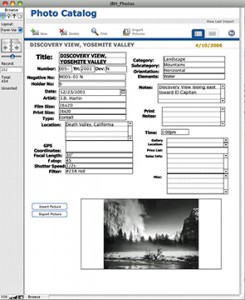 We also keep a computer database which contains our catalog of available photographs. This database contains all of the information from the film and printing notes. The master catalog database also contains information on the number of prints available, price, and exhibition information.