 We hope that everyone has survived the heat of summer and are ready for a little cooler weather and maybe some photography. We have several events coming up beginning this September. We have an exhibition of thirty of our latest photographs coming up at the Langdon Center in Granbury starting next month.
Exhibit: “THROUGH THE LENS OF THE VIEW CAMERA” by JB and Susan Harlin
Dora Lee Langdon Cultural and Educational Center in Granbury, Texas.
September 3-30, 2010
Artist Reception
September 24, 2010
5-9 pm
___________________________________________________________
We are excited to have been chosen to be included in this year’s Langdon Review. Langdon Review of the Arts in Texas is an annual publication of Tarleton State University providing an overview of the year’s most exciting cultural accomplishments in Texas.
The Langdon Review Weekend is an annual literary and arts festival that takes place the first Wednesday thru Saturday after Labor Day. The “Weekend” kicks off on Wednesday, on the Tarleton State campus in Stephenville, and then moves to the Dora Lee Langdon Cultural and Educational Center in Granbury, Texas, for the remainder of most of the festivities. This festival is when the co-editors unveil the year’s Texas Review of the Arts in Texas journal.
We are honored to have been asked to speak Thursday evening at this years festival weekend. We will also be attending the Publication Reception Friday afternoon and hope to see many of you there. More information can be found by following the links below.
Langdon Review Weekend Registration: CLICK HERE
Schedule: CLICK HERE
Presentation – part of Langdon Review Weekend –
“BIG CAMERAS BIG FILM” JB & Susan Harlin
September 9, 2010
7:30-9:00 pm (second half of session)
J. B. and Susan Harlin (photographers), “Big Cameras, Big Film,” a 40 minute PowerPoint presentation/talk that covers the Harlins’ travels and what they do. J. B. and Susan also bring cameras, photographs, and samples of large negatives for Show and Tell.
J. B. and Susan work with film sizes that range from 4 x 10 to 16 x 20 inches. Using very large cameras and film allows a greater feeling of texture and reality not achievable with other media. Most of the finished photographs are created by placing these large negatives directly in contact with the printing paper. For more information, go to jbhphoto.com.
————————–
PUBLICATION RECEPTION FOR “LANGDON REVIEW OF THE ARTS IN TEXAS JOURNAL”
Langdon Center Lawn
Granbury, TX
September 10, 2010
4:30-6:00 pm
___________________________________________________________
We will also be attending a reception at the Adobe Western Art Gallery in the Fort Worth Stock Yards Saturday September 11th in conjunction with Fort Worth Gallery night. Also hope to see many of our friends there.
Gallery Night Celebration
ADOBE WESTERN ART GALLERY
2324 North Main Street
Fort Worth, Texas. 76106
September 11, 2010
5-9 pm
___________________________________________________________
As always we would like to thank our friends and customers for your support.
JB & Susan

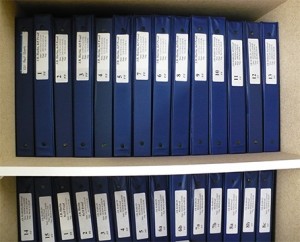 In the last entry I talked about making film notes in the field. That is the first step in the process of record keeping. I didn’t mention the last step which is negative storage. Each negative is marked on one edge with a unique number, then inserted into a clear sleeve then into an archival envelope. Each envelope has the negative number written on the upper edge. The envelopes are then placed into archival boxes, which are labeled with the contents. Also, the smaller film is proofed on our standard paper. These proof sheets are punched, and filed in binders. That pretty much sums up the negative end of the process.
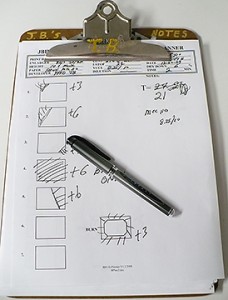 we use to record the process. We make our own print planner sheets using the computer to document every step in the darkroom. Our print planner sheets have spaces to record all pertinent information for the creation of a finished print. It includes the negative number and date, along with the print date, printing paper, developer, enlarger settings and such. The print planner sheet also has a series of boxes to record exposure manipulations. . . burning and dodging. That way if we ever need to go back and reprint, we have a record of exactly how we made the first prints. These sheets are filed in a three ring binder and labeled for future reference if needed.
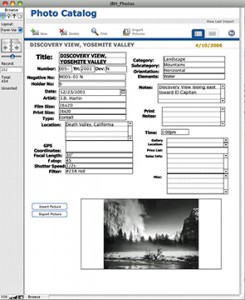 We also keep a computer database which contains our catalog of available photographs. This database contains all of the information from the film and printing notes. The master catalog database also contains information on the number of prints available, price, and exhibition information.
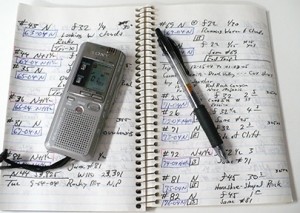 I have written quite a bit about LF and ULF photography here on the jbhphoto BLOG since we started back in January of 2009. A lot of it is my rambling about this or that, and sometimes I tend to repeat myself. Oh well, must be old age??? One thing that I do not remember writing about is keeping notes. We are both meticulous about keeping records of our travels and detailed notes on the film we shoot.
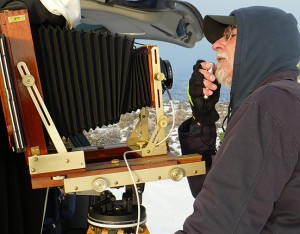 the places we visit and are used to plan future trips and serve as a visual reminder of the places and things we discover. We also keep a daily diary/travel log of what, when, and where we were on a particular day. I have to admit that Susan is better at the diary than me, but at the end of every day before we drop off to la-la land, we try to type a few paragraphs. We keep this on a laptop computer and entries continue till the trip is over. It is a great resource, along with the snapshots, later when trying to come up with exactly what happened on any particular adventure.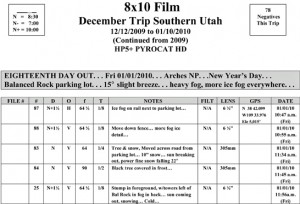
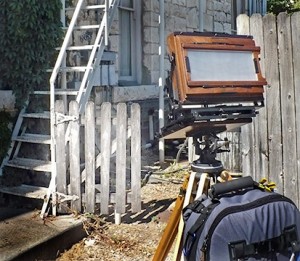
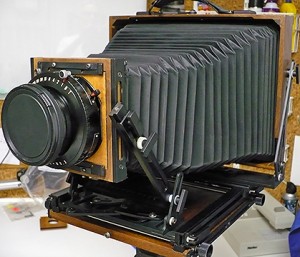

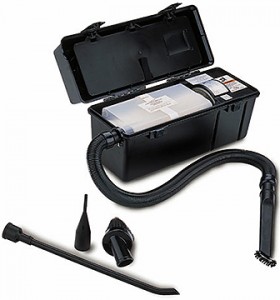

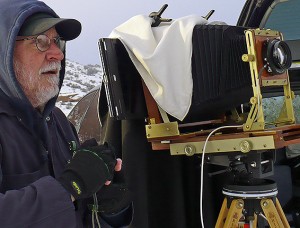
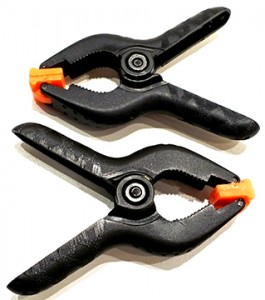
 What are you looking for? A new camera? Pieces and parts? A new lens? We are cleaning out our equipment closet and it is time for some things to go to someone that can use them. The excess equipment we no longer need may be just what you are looking for.