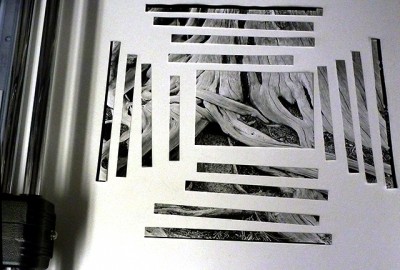
 Those that dictate hard and fast, unwavering, rules for the creation of art usually are the vane, egotistical, self-centered types that are full of their own over-inflated view of their importance and try to tell you that cropping is an unforgivable sin. I say. . . Not True!
No one has the authority, nor the right, to tell you what, nor how, to create your art. Cropping is a personal decision, and can only be justified by you as an individual. If cropping helps any particular photograph, then it is no sin to proceed to crop away.
Cropping is best done in the camera at the time you make the negative, but it is not always possible. There will always be those instances that appropriate framing is just not possible in the field. Never pass up an opportunity just because the perfect image does not exactly fit the film. Keep cropping as an option. Do not dismiss anything that will help. 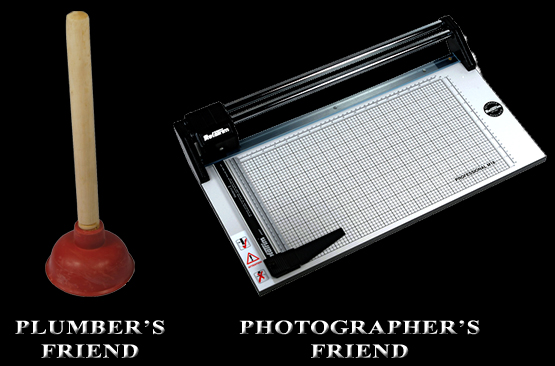
During the printing process look carefully at your first work print and determine if the image is strong from corner to corner. Use cropping L’s to mask questionable edges of the image and determine if lopping off some of the image will strengthen it. If you are enlarging you can reset the easel and the print size. If you are contact printing, a rotary trimmer is your best friend. The choice is totally yours. Do not be a slave to others opinions. There are no rules. The decision is so eloquently expressed by Bob Segar: “What to leave in, what to leave out. . .”
If cropping does not improve the photograph, maybe it is a good idea to find another image that will be more expressive. If you do hit a brick wall with a photograph, save your work and put it aside for later. There are few negatives of questionable substance that are worth killing yourself in order to print. You are usually better off to concentrate on those that are not a struggle to print.
It is easier on you and more productive, and less frustrating, to make negatives that are well seen and easy to print. A mastery of craft will make everything work more smoothly, but never let anyone tell you that you should not, can not, crop your photograph. Just don’t go there! Cropping can be your best friend.
JB
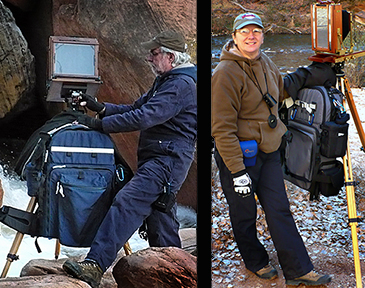 Strange how many questions we get about what we do, why we do it, and always how do you do certain things. I never mind answering questions. This is how one learns, and I feel that sharing what you know is very important. We have no secrets. . . no secret methods. . . secret places. . . secret formulas. . . or anything that is in any way secret.
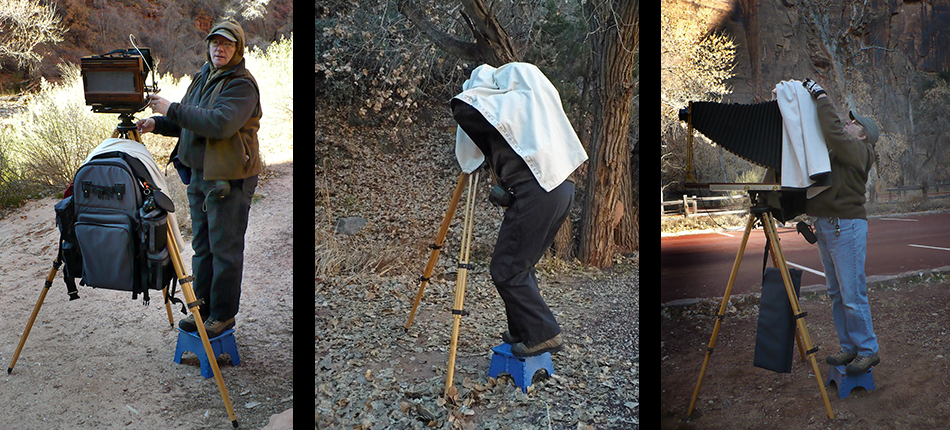
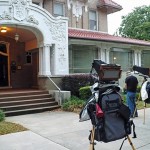
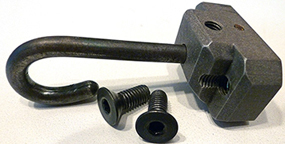
 We tend to photograph in remote locations. We are always climbing over rocks, and are knee deep in mud or snow. One of the first packs I used was a really well-made and versatile Art Wolfe design that was perfect for a 4×5. The pack had a small webbing loop at the top and I soon found myself hooking it to one of the knobs on my Zone VI tripod. Worked great!
 a challenge. When I need to think about something, I usually take a nap. I do my best thinking when asleep.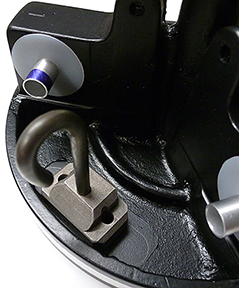
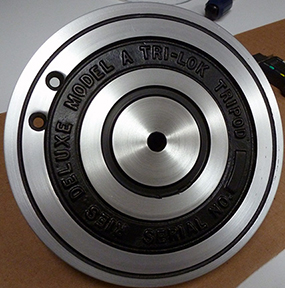
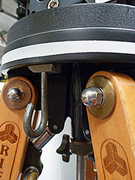 I have added this modification to both our ‘J’ and ‘A’ model Ries tripods and they have preformed flawlessly for years. Ries tripods are extremely well-made and will support well beyond their factory weight ratings. I have hung a 45 plus-pound pack from my ‘A’ model for years now and never had any issues. . . except sometimes heaving that heavy pack onto the hook when in a difficult position.
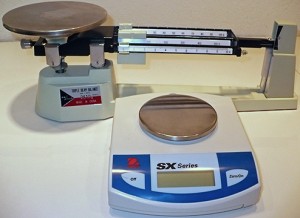 I have always been an advocate of vertical integration. The more you can do yourself, the better control you have of the outcome. For many years I used prepackaged photo chemicals and have never had a problem. But, as the traditional darkroom and the materials used become more and more an alternative process, commercially available photo chemicals are getting harder to find. Some favorite chemicals have vanished. An old favorite, the Zone VI line of print developer, fixer and hypo are now gone from Calumet. I recently witnessed 8 bags of print developer and 2 bags of print and film fixer selling for $127.50 on eBay. That is well over double the original cost from Calumet.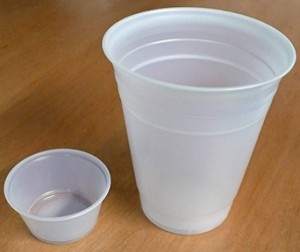
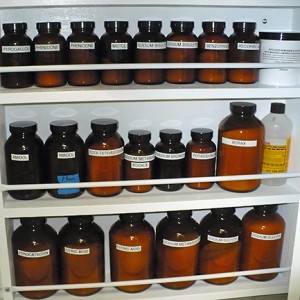 As I said before, for me, mixing photo chemicals is nothing less than following a recipe.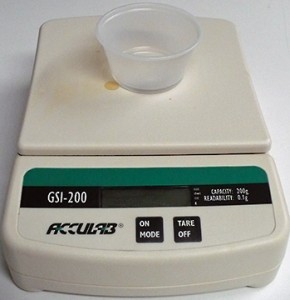
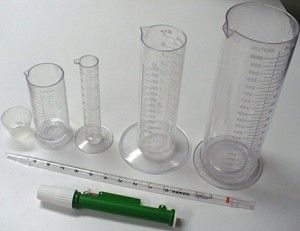 I use distilled water for all stock solutions. I always use distilled water for stock solutions and processing film. Unless your tap water has known problems, it should be fine for mixing printing chemicals.